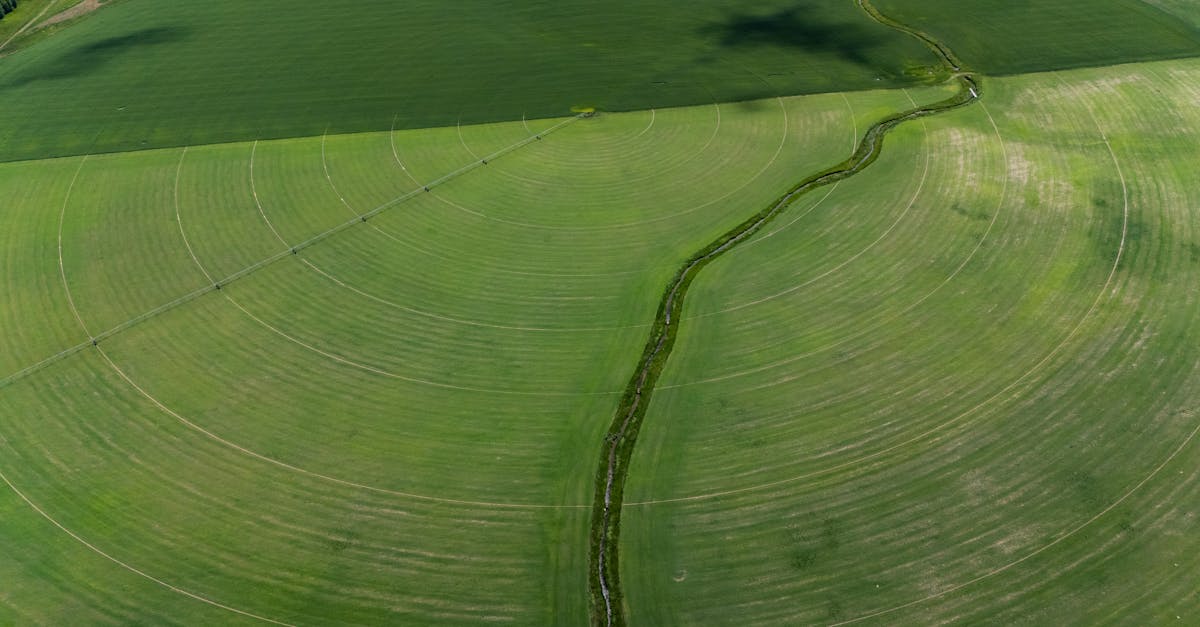
Advantages of Using Drones for Topographical Mapping
Table Of Contents
High-Resolution Imaging Capabilities
Drones equipped with advanced camera technology can capture high-resolution images that surpass traditional mapping methods. This capability allows for the detailed visual representation of landscapes, facilitating the identification of topographical features that may otherwise go unnoticed. The precision of these images enhances the analytical processes involved in mapping and surveying, providing a clearer understanding of the terrain. Such clarity is crucial for projects that require meticulous planning and execution.
Furthermore, drones have the ability to cover extensive areas in a fraction of the time it would take using conventional techniques. This efficiency not only saves time but also significantly reduces costs associated with manpower and equipment. The integration of high-resolution imaging with drone technology ensures that data is both reliable and easily accessible. Users can obtain up-to-date visual information that aids in various applications, from landscape planning to environmental monitoring.
Capturing Detailed Topographical Features
Drones equipped with high-resolution cameras provide exceptional detail when capturing the intricate features of the landscape. These aerial images reveal subtle variations in terrain that traditional mapping methods might overlook. With the ability to fly at diverse altitudes, drones can acquire data from multiple perspectives. This flexibility enhances the quality of the images and ensures that even the most complex topographies are accurately represented.
The precision of drone technology allows for the collection of 3D models, which can depict features such as hills, valleys, and waterways in vibrant detail. These models assist engineers, planners, and environmentalists in their analyses, facilitating a better understanding of the terrain. In industries like construction and conservation, this degree of detail is vital for effective planning and management. The integration of advanced cameras and mapping software further enhances the ability to capture and interpret topographical features accurately.
Real-Time Data Processing
The integration of drones in topographical mapping allows for swift data collection and analysis, providing immediate insights that support decision-making processes. Advanced onboard processing systems enable drones to compile and assess data while in-flight, vastly reducing the time between data acquisition and usability. This rapid turnaround can prove crucial during projects where timely information impacts the outcome, such as in construction planning or environmental monitoring.
Surveyors and mappers benefit from accessing up-to-date information without the delays typically associated with traditional surveying methods. The capability to visualize and evaluate data in real-time enhances collaboration among teams. Stakeholders can make informed decisions faster, leading to improved project efficiency and minimizing costly errors. Drones transform the workflow, streamlining operations while ensuring high accuracy in mapping tasks.
Immediate Analysis for Faster Decision-Making
Drones equipped with advanced imaging technology can significantly accelerate the data processing phase in topographical mapping. Traditional surveying methods often require extensive time for data collection and analysis. In contrast, drones can capture vast areas in a fraction of the time while providing rich datasets that can be transferred to analytical software in real time. This allows for quicker generation of maps and models, enabling surveyors and planners to make informed decisions promptly.
By leveraging software that processes aerial imagery on the fly, teams can immediately visualise terrain changes, identify potential issues, and make necessary adjustments to their plans. This capability is particularly beneficial in dynamic environments such as construction sites or disaster-affected areas. Immediate access to data supports not only operational efficiency but also enhances safety by facilitating faster responses to changing conditions on the ground.
Versatility in Mapping Applications
Drones have become invaluable tools across various industries, offering unique advantages in mapping applications. Their flexibility allows for use in diverse contexts such as agriculture, construction, mining, and environmental monitoring. In agriculture, drones can efficiently survey large fields, helping farmers monitor crop health and assess soil conditions. In construction, they can map land before development and track progress throughout the project lifecycle.
The capability of drones to adapt to different mapping needs enhances their utility significantly. For instance, they can capture data for topographical surveys, 3D modelling, and even thermal imaging. This versatility empowers professionals to conduct thorough analyses tailored to specific requirements. As technologies evolve, drone applications in mapping continue to expand, addressing complex challenges and providing new opportunities for data collection and analysis.
Utilising Drones for Various Survey Types
Drones have gained widespread acceptance across multiple surveying applications, including construction, agriculture, and environmental monitoring. Their ability to cover vast areas quickly allows professionals to generate comprehensive datasets that capture intricate details of the landscape. This efficiency benefits sectors that require high levels of precision, such as mining, where accurate measurements can optimise resource extraction and site planning. The integration of drones into these workflows not only enhances productivity but also reduces the time traditionally spent on manual data collection.
In agricultural settings, drones can assess crop health, monitor irrigation patterns, and perform yield estimates. This capability provides farmers with invaluable insights into their operations, enabling informed decision-making that can improve productivity and sustainability. For environmental studies, drones are employed to monitor wildlife habitats, assess vegetation growth, and evaluate land use changes. Their versatility makes drones a powerful tool for diverse surveying needs, helping professionals adapt to the specific requirements of each project while maintaining a high standard of accuracy.
FAQS
What are the main advantages of using drones for topographical mapping?
Drones offer high-resolution imaging capabilities, real-time data processing, and versatility in mapping applications, which enhance the accuracy and efficiency of topographical surveys.
How do drones provide high-resolution imaging for mapping?
Drones are equipped with advanced cameras and sensors that capture detailed aerial images, allowing for precise mapping of topographical features.
What does real-time data processing mean in the context of drone mapping?
Real-time data processing allows for immediate analysis of the captured data, enabling faster decision-making and quicker project turnaround times.
Can drones be used for different types of surveys?
Yes, drones can be utilised for various survey types including land surveys, construction site assessments, environmental studies, and agricultural mapping, making them highly versatile tools.
Are there any limitations to using drones for topographical mapping?
While drones provide many advantages, limitations can include regulatory restrictions, weather conditions affecting flight capabilities, and the need for trained personnel to operate the equipment effectively.
Related Links
The Role of Drones in Modern Land Surveying PracticesTraining and Certification for Drone Survey Operators
Case Studies: Successful Drone Applications in Land Surveying
Regulatory Compliance for Drone Operations in Surveying
Enhancing Survey Accuracy through Drone Imagery
Safety Considerations When Using Drones in Land Surveying
The Future of Aerial Surveying: Drones vs. Conventional Methods